Restore the Beauty of Your Tile Floors With Professional Cleaning
Tile floors are a popular choice for kitchens, bathrooms, entryways, and other busy areas because they are durable, practical, and easy to maintain. However, even when tiles look clean, the grout lines between them can gradually collect dirt, grease, moisture, and soap residue. Over time, these deposits can leave floors looking dull and discolored.
Professional tile and grout deep cleaning can help remove accumulated soil and restore a fresher appearance to tiled surfaces. With the right cleaning products, suitable equipment, and appropriate sealing methods, homeowners can make tile maintenance more manageable and help protect porous grout against future contamination.
MGx Hardwood Care can help homeowners explore suitable flooring and surface maintenance solutions. Customers interested in professional tile restoration should confirm whether the company currently offers tile cleaning, grout cleaning and sealing, and protective treatments for kitchen and bathroom floors.
Why Tile and Grout Need Specialized Cleaning
Tiles and grout do not always respond to cleaning in the same way. Glazed ceramic and porcelain tiles generally have relatively nonporous surfaces, while cement-based grout is porous and can absorb moisture, oils, and dirt.
Regular mopping may remove surface debris, but dirty cleaning water can sometimes leave residue behind. Grout lines may also retain contaminants that ordinary household cleaning cannot adequately remove.
Common Tile and Grout Problems
Dark grout lines: Dirt and grease accumulate in porous grout, changing its original color.
Kitchen grease: Cooking oils and food residue can build up on tiles and grout near cooking areas.
Bathroom soap scum: Soap deposits and mineral residue can make tiled surfaces appear dull.
Mold and mildew: Persistent moisture can encourage mold or mildew growth in susceptible areas.
Stubborn stains: Spills, cosmetics, and everyday use can leave marks that resist routine cleaning.
Uneven appearance: Some grout lines may look darker than others because of differences in moisture exposure and traffic.
Identifying the cause of discoloration is important because dirt, mineral deposits, mold, and damaged grout may require different treatments.
How MGx Hardwood Care Can Help With Tile and Grout Maintenance
Maintaining tiled floors involves more than removing visible dirt. The cleaning method must suit the tile material, grout type, existing sealant, and condition of the surface.
MGx Hardwood Care can help homeowners discuss their floor care needs and identify suitable maintenance options. Before arranging a service, customers should confirm whether the company provides dedicated tile and grout cleaning, high-pressure rotary cleaning, and grout sealing.
1. Assessing Tile and Grout Conditions
A proper assessment helps identify the type of tile, the condition of the grout, and the source of visible staining.
The inspection may also reveal cracked grout, damaged sealant, loose tiles, or moisture-related problems that cleaning alone cannot resolve.
This information helps determine which cleaning products and equipment are appropriate for the surface.
2. Selecting the Right Cleaning Products
Different contaminants respond to different cleaning solutions. Grease and oily residue may require an appropriate alkaline cleaner, while mineral deposits may need a different treatment suitable for the specific tile and grout.
Using an unsuitable product can damage natural stone, affect grout color, or weaken certain finishes. Product selection should always follow manufacturer recommendations and include testing in an inconspicuous area when appropriate.
3. Supporting Long-Term Surface Protection
After cleaning, suitable grout sealing may help reduce the absorption of certain liquids and contaminants. However, sealing is not a substitute for regular maintenance or moisture control.
MGx Hardwood Care customers can ask which tile and grout care services are available and whether a protective treatment is suitable for their particular flooring.
Understanding the Tile and Grout Deep Cleaning Process
Professional tile cleaning often combines surface preparation, targeted cleaning solutions, mechanical agitation, and controlled rinsing or extraction.
Alkaline Pre-Treatments for Grease and Embedded Soil
Alkaline pre-treatments are cleaning solutions used to help loosen certain types of soil, particularly grease, oils, and organic residues.
The product is applied according to its instructions and allowed to work for the recommended period. Appropriate brushes or cleaning equipment may then be used to agitate the surface before the loosened contamination is removed.
Why Pre-Treatment Matters
Applying a suitable cleaner before mechanical cleaning can help loosen stubborn deposits and improve the effectiveness of the cleaning process.
However, stronger is not always better. Highly alkaline products may be unsuitable for some natural stones, coatings, and sensitive surfaces. A professional should select a solution based on the tile material and grout condition.
High-Pressure Rotary Tile Spinner Cleaning
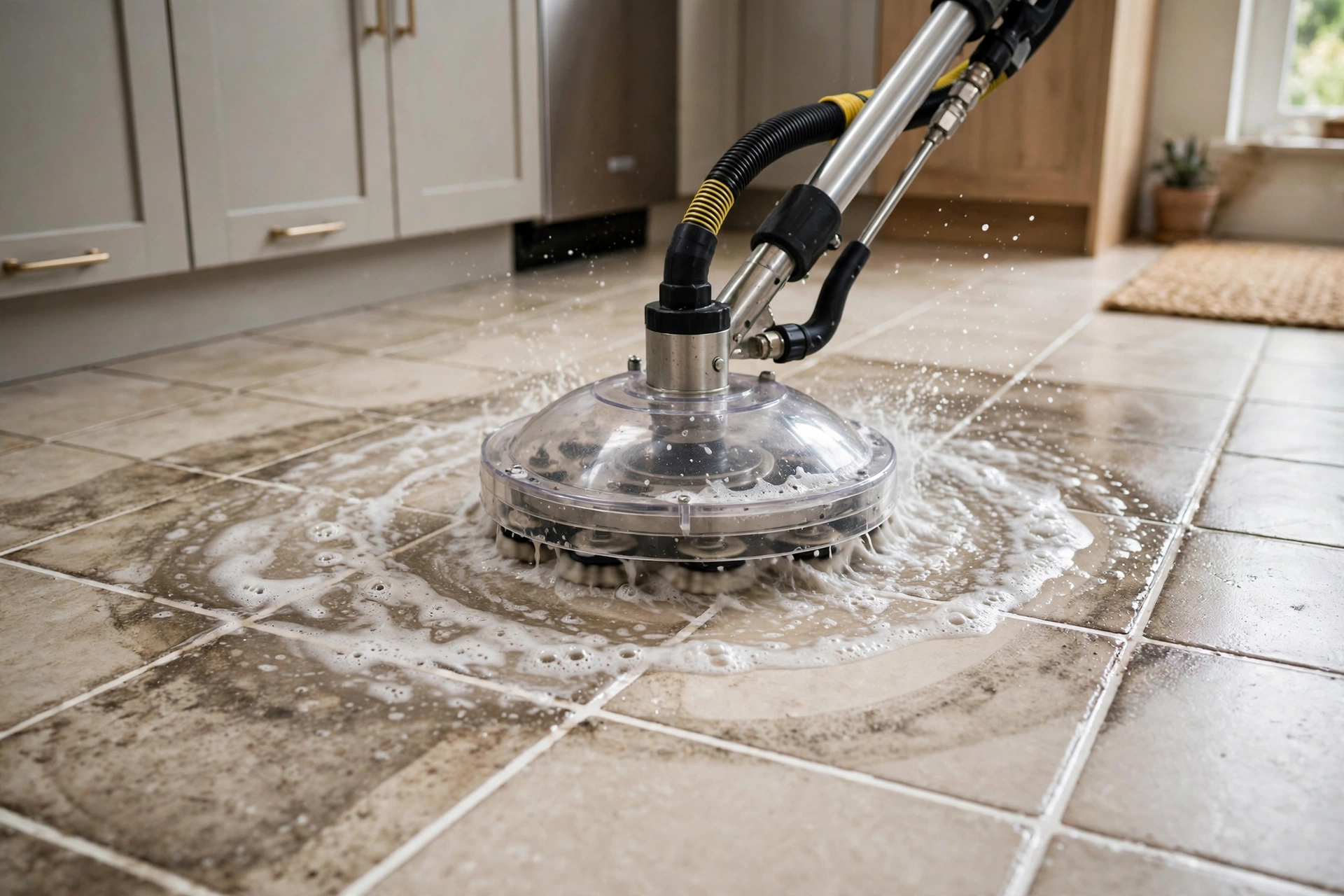
A high-pressure rotary tile spinner is specialized cleaning equipment designed for certain hard-surface applications. It typically uses rotating spray jets inside a contained cleaning head to distribute water and cleaning action across the floor.
When properly selected and operated, this equipment can help remove loosened dirt from suitable tile and grout surfaces while controlling much of the spray and wastewater.
How Rotary Tile Cleaning Works
The process generally includes the following stages:
Inspecting the tile and grout for damage or areas requiring special treatment.
Removing loose dirt and debris from the surface.
Applying an appropriate pre-treatment to loosen grease and embedded soil.
Using compatible rotary cleaning equipment to agitate and rinse the surface.
Recovering wastewater and removing remaining cleaning residue.
Allowing the floor to dry before evaluating whether sealing is needed.
The correct pressure, temperature, cleaning solution, and equipment settings depend on the tile and grout materials.
Benefits of Specialized Tile Cleaning Equipment
More consistent cleaning: Rotary equipment can help treat larger tiled areas more evenly than spot cleaning alone.
Targeted soil removal: Suitable equipment can help loosen contamination from grout lines and textured tile surfaces.
Controlled water distribution: A contained cleaning head may reduce splashing compared with an open spray method.
Improved maintenance: Removing embedded dirt can help restore the appearance of floors in kitchens, bathrooms, and other high-use areas.
Not every tile is suitable for high-pressure cleaning. Excessive pressure or inappropriate equipment can damage weak grout, loose tiles, or sensitive surfaces, so the method must be chosen carefully.
Grout Cleaning and Sealing: Protecting Porous Grout Lines
Once grout has been thoroughly cleaned and dried, a suitable sealer may help protect it against certain types of staining and moisture absorption.
Professional grout cleaning and sealing involves preparing the grout properly and applying a product designed for the specific material.
Clear Penetrating Grout Sealers
A clear penetrating sealer enters the pores of compatible grout and helps reduce the absorption of water and some contaminants without necessarily creating a visible surface coating.
These products are commonly considered for cement-based grout where additional protection is appropriate.
Benefits of Penetrating Sealers
May reduce the absorption of certain liquids.
Can make routine grout maintenance easier.
May help limit staining when spills are addressed promptly.
Generally preserve the grout’s natural appearance when applied correctly.
A penetrating sealer does not make grout completely waterproof or stain-proof. Shower waterproofing, properly installed membranes, and sound grout remain essential for managing moisture.
When Should You Seal Tile Grout Lines?
Sealing may be appropriate for compatible porous grout after cleaning, repairs, and adequate drying. However, not every tile or grout product requires the same treatment.
Some porcelain tiles and other nonporous surfaces may not need a penetrating sealer, while certain grout formulations have specific sealing requirements.
Before applying a product, confirm that the grout is suitable for sealing and follow the manufacturer’s instructions for application and drying.
Color Seal Protection for Discolored Grout
Sometimes grout remains uneven in color even after deep cleaning. This can happen when stains have penetrated the material or the original grout color has changed over time.
A grout color sealer, also called a grout colorant in some product systems, can provide a more uniform appearance while offering a degree of surface protection.
When Is Color Sealing Useful?
Color sealing may be worth considering when:
Grout remains discolored after appropriate cleaning.
Different sections of the floor have noticeably different grout shades.
Homeowners want to refresh the appearance of older grout lines.
The grout is structurally sound and suitable for the selected product.
Clear Sealer vs. Color Sealer
A clear penetrating sealer is primarily intended to reduce absorption while maintaining the existing grout color. A color sealer is designed to change or standardize the grout’s appearance and may create a protective layer on the surface.
The right choice depends on the condition of the grout and the desired finish. Color sealing cannot repair cracked, missing, or structurally damaged grout.
Kitchen and Bathroom Tile Restoration
Kitchens and bathrooms face different cleaning challenges because of their exposure to grease, food residue, soap, moisture, and frequent use.
Kitchen Tile and Grout Cleaning
Kitchen floors can accumulate cooking oils, food spills, and tracked-in dirt. Grout near cooking areas may become darker as grease and residue build up.
Appropriate pre-treatment, mechanical cleaning, and thorough residue removal can help improve the appearance of suitable kitchen tiles and grout.
To maintain the results, wipe spills promptly, sweep regularly, and use a cleaner recommended for the installed tile.
Bathroom Tile and Grout Cleaning
Bathroom floors and shower areas are frequently exposed to water, soap residue, and humidity. These conditions can contribute to staining and mold or mildew growth where moisture persists.
Cleaning can help remove surface contamination, but recurring mold may indicate inadequate ventilation, leaks, or another underlying moisture issue.
Managing Bathroom Moisture
Use bathroom ventilation to reduce excess humidity.
Repair leaks and damaged grout promptly.
Remove standing water where practical.
Clean tiled surfaces with suitable products.
Allow wet areas to dry between uses when possible.
Sealing grout may support routine maintenance, but it will not correct leaks or replace appropriate waterproofing.
Maintaining Tile and Grout After Professional Cleaning
Regular care helps preserve the appearance of tiled floors and reduces the buildup of dirt between professional treatments.
Simple Tile Floor Care Tips
Sweep or vacuum loose debris before mopping.
Use a pH-neutral cleaner suitable for the tile material.
Avoid abrasive tools that may scratch delicate surfaces.
Rinse away cleaning residue when the product instructions require it.
Wipe up spills promptly, especially oils and strongly colored liquids.
Keep grout lines in good condition and repair damaged sections when needed.
Follow the manufacturer’s guidance for resealing where applicable.
Avoid mixing cleaning chemicals, particularly bleach with ammonia or acidic products. Using one appropriate cleaner at a time reduces the risk of hazardous reactions and surface damage.
Why Consider MGx Hardwood Care for Your Flooring Needs?
Clean, well-maintained floors can make a home feel more comfortable and presentable. However, effective tile restoration requires the correct products, equipment, and understanding of the surface being treated.
MGx Hardwood Care can help homeowners discuss their flooring maintenance requirements and explore available care solutions. Customers should confirm whether the company offers tile and grout deep cleaning, rotary tile spinner cleaning, clear penetrating sealers, and grout color sealing.
Before booking, ask about the proposed cleaning process, product compatibility, grout condition, drying requirements, and whether any repairs are needed before sealing. This helps establish realistic expectations and ensures the treatment is suited to the surface.
Conclusion
Tile and grout deep cleaning can help restore the appearance of kitchen, bathroom, and other tiled surfaces by removing accumulated dirt, grease, and suitable stains. Alkaline pre-treatments and rotary cleaning equipment can support the process when appropriate for the material, while penetrating sealers and grout color protection may help simplify ongoing maintenance.
The most effective approach depends on the tile type, grout condition, and source of discoloration. Regular cleaning, prompt spill treatment, and proper moisture control remain essential for long-term results.
Contact MGx Hardwood Care to discuss your flooring care needs and confirm which tile cleaning, grout restoration, and sealing services are currently available. With the right maintenance plan, you can help keep your tiled surfaces cleaner, fresher, and easier to maintain.