Carpets add warmth, comfort, and style to a home, but everyday foot traffic can gradually affect their appearance. Hallways, living rooms, stairs, and family areas often collect dirt, food spills, pet accidents, and other contaminants. Over time, these everyday challenges can leave carpet fibers looking dull and make stains more difficult to remove. Carpet protector application offers an additional layer of defense that can help homeowners manage spills, maintain their carpets, and reduce the effort required for routine cleaning.
Manufacturers design products such as Scotchgard carpet protection to help certain carpet fibers resist water-based spills and staining. When you apply it correctly to a compatible carpet, a protector can provide homeowners with extra time to respond to accidents before liquids become harder to remove. However, carpet protection is not a substitute for regular vacuuming or professional cleaning, and it does not make carpet completely stainproof.
This guide explains how carpet protectors work, the benefits of stain-resistant carpet treatment, the role of fluorochemical barrier technology, and how protection may contribute to the long-term value of high-traffic flooring. You can contact MGx Hardwood Care to confirm whether carpet protection application is among its current services.
What Is Carpet Protector Application?
Carpet protector application involves applying a compatible protective treatment to carpet fibers to help reduce the absorption or adhesion of certain spills and soils. Depending on the product, the treatment may make liquids bead on the surface for a short period, allowing you to blot them before they penetrate deeply into the fibers.
Carpet protectors are especially useful in homes where carpets experience frequent activity. Children playing indoors, pets moving between rooms, guests visiting, and daily movement through hallways can all increase the likelihood of spills and soil buildup.
How Carpet Protection Works
Manufacturers formulate many carpet protectors to alter the surface characteristics of carpet fibers. Rather than creating a thick, visible coating, these treatments provide a fine protective layer that helps resist certain types of contamination.
Repelling Liquid Spills on Carpet
A liquid-repellency treatment may cause compatible water-based spills to bead instead of immediately spreading into the fibers. This can give homeowners an opportunity to blot the spill before it becomes a deeper stain.
The degree of repellency depends on the product, the carpet fiber, the application process, and the condition of the carpet. Not every liquid will bead, and some substances may penetrate quickly or cause discoloration regardless of protection.
Making Soil Easier to Remove
Some carpet protectors also help reduce the attachment of dry soil to treated fibers. When dirt is less likely to cling tightly, regular vacuuming may remove more of it before it becomes embedded.
However, a protector does not prevent dust, grit, and debris from entering the carpet. Consistent vacuuming remains important, especially in entryways and other high-traffic areas.
Understanding Scotchgard Carpet Protection
Scotchgard remains a familiar name for products that help protect fabrics and carpets against certain stains and spills. The specific benefits depend on the exact product formulation and whether it is intended for carpet, upholstery, or another material.
Homeowners should always choose a product labeled for their particular carpet type. Do not automatically assume that a treatment intended for upholstery or clothing suits wall-to-wall carpet.
What Benefits Can Scotchgard Offer?
When you correctly apply a compatible carpet product, potential benefits include:
More time to respond to certain liquid spills.
Easier blotting of some fresh stains.
Reduced attachment of some types of dry soil.
Support for routine carpet maintenance.
Help maintaining the carpet’s appearance between professional cleanings.
These benefits are not guarantees. Results vary with the type of spill, the carpet’s construction, product coverage, and how quickly the affected area is cleaned.
Is Carpet Protection the Same as Waterproofing?
No. Carpet protector is not the same as waterproofing. Most carpet protection treatments are intended to help resist particular spills and stains, not prevent all moisture from reaching the carpet backing, padding, or subfloor.
Large spills, repeated pet accidents, and prolonged exposure to moisture can still penetrate the carpet. Prompt cleanup remains essential to reduce the risk of lingering odors, material damage, and moisture-related problems.
Fluorochemical Barrier Technology Explained
Some traditional carpet protectors have used fluorochemical-based chemistry to modify the surface properties of fibers. Depending on the formulation, these treatments can help resist water-based liquids, oily soils, or both.
How the Protective Barrier Works
Carpet fibers have surface characteristics that influence how liquids and soil interact with them. Certain protective treatments reduce the tendency of compatible substances to spread across or attach to treated fibers.
Instead of functioning as an impermeable shield, the treatment changes the interaction between the carpet surface and selected contaminants. This may allow a spill to remain easier to blot or soil to be removed more readily during vacuuming.
Water and Oil Resistance Are Different
Water repellency and oil resistance are not identical. A product may be effective against certain water-based spills but less effective against cooking oils, greasy food, cosmetics, or other oily substances.
Before choosing a treatment, homeowners should review the product label to understand which types of spills it is designed to resist.
Product Chemistry and Environmental Considerations
Not every modern carpet protector uses the same chemistry. Formulations can differ, and some products may use alternative technologies rather than older fluorochemical approaches.
Because certain fluorinated chemicals, including some per- and polyfluoroalkyl substances (PFAS), have raised environmental and health concerns, it is sensible to review current product information and manufacturer disclosures. Do not assume that every Scotchgard-branded product has the same ingredients or environmental profile.
Homeowners who prefer to limit particular chemical ingredients can ask the manufacturer or service provider for the current product’s technical information and safety data sheet before application.
Why High-Traffic Homes Benefit From Carpet Protection
Some areas of the home experience much heavier use than others. Hallways, staircases, entryways, family rooms, and routes between the kitchen and living room are particularly vulnerable to repeated foot traffic.
Over time, these areas can accumulate grit and other abrasive particles. As people walk across the carpet, this material can rub against the fibers and contribute to visible wear.
Protecting Hallways and Entryways
Hallways and entrances often collect dirt brought in on shoes. A suitable carpet protector may help make certain soils easier to remove, but pair it with doormats and regular vacuuming.
Consider placing durable mats at entrances and removing outdoor shoes where practical. These simple habits reduce the amount of dirt reaching the carpet in the first place.
Keeping Living Rooms Presentable
Living rooms commonly experience a combination of foot traffic, food spills, drinks, and activity from children or pets. A protective treatment may make some fresh spills easier to manage and help homeowners maintain a cleaner appearance.
Protecting Carpet Around Furniture
Areas around sofas, dining chairs, and coffee tables can be exposed to frequent movement and occasional spills. Vacuuming under movable furniture and cleaning spills promptly help prevent dirt from accumulating in these locations.
Furniture pads may also reduce friction and pressure in areas where furniture legs rest on carpet.
Supporting Carpet Care in Homes With Pets
Pets can introduce hair, dirt, moisture, and occasional accidents. Carpet protection may help with certain spills, but it is not a substitute for an appropriate pet stain and odor treatment.
Pet urine can penetrate into carpet backing and padding, where ordinary surface cleaning may not fully address the contamination. For pet accidents, blot promptly and use a cleaner suitable for the carpet and the type of stain. Persistent odors may require more specialized assessment.
How Carpet Protector Application Can Make Cleaning Easier
Protective treatments are most useful when they form part of a consistent carpet maintenance routine. Their main advantage is that some contaminants may be easier to remove before they become deeply embedded or permanently discolor the fibers.
Easier Cleanup of Fresh Spills
When a compatible liquid beads on a treated carpet, homeowners may have more time to blot it. This can reduce the chance of the spill spreading rapidly through the fibers.
A simple spill-response routine includes the following steps:
Remove solid material carefully without grinding it into the carpet.
Blot liquid with a clean, absorbent cloth or paper towel.
Use a carpet-compatible cleaning product when needed.
Follow the cleaner’s instructions and avoid overwetting the area.
Allow the carpet to dry fully and check for remaining residue.
Always blot rather than scrub aggressively. Excessive friction can damage carpet fibers and spread a stain.
Supporting Regular Vacuuming
Carpet fiber protection may help certain dry soils release more easily during vacuuming. However, the results depend on the type of fiber, the treatment, and the nature of the soil.
For best results, vacuum high-traffic areas more frequently than rooms used only occasionally. Use a vacuum suitable for the carpet construction, and follow the carpet manufacturer’s maintenance recommendations.
Reducing Soil Buildup Between Professional Cleanings
Dirt that remains in a carpet for long periods can become harder to remove. A compatible protector may support routine cleaning by helping selected contaminants remain easier to release from the fibers.
Nevertheless, protection does not eliminate the need for periodic deep cleaning. Over time, foot traffic, cleaning, and normal use can reduce the effectiveness of a protective treatment.
Carpet Protector Application: DIY or Professional Service?
Homeowners may choose between applying a suitable retail product themselves or contacting a professional service. The best option depends on the size of the area, the carpet material, the condition of the carpet, and the manufacturer’s application instructions.
DIY Carpet Protection
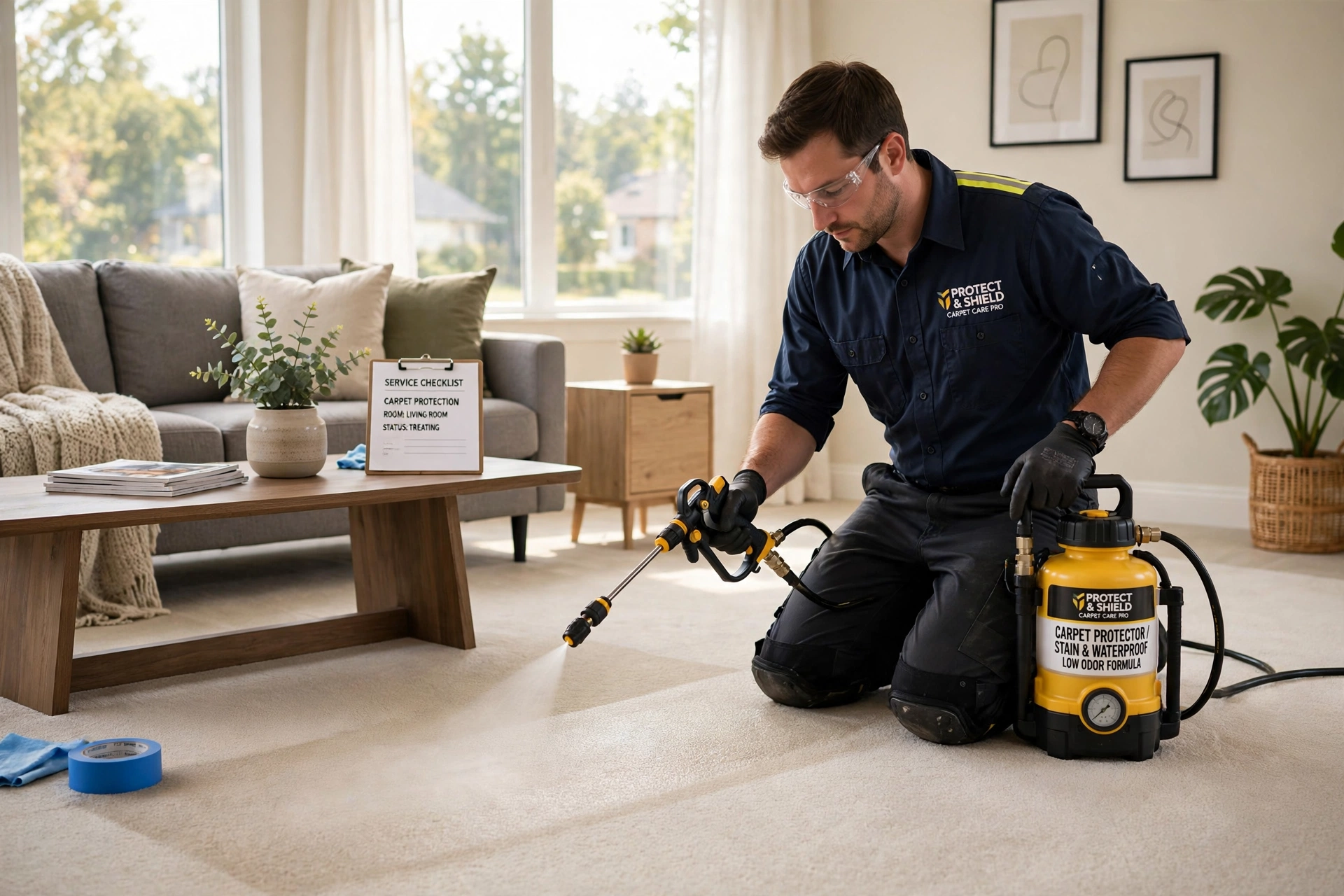
Retail carpet protectors can be suitable for some small areas when the product label explicitly permits the intended use. Before applying a treatment, clean the carpet as directed, test the product in an inconspicuous area, and check for any changes in color or texture.
Follow the recommended coverage rate, ventilation instructions, drying time, and any restrictions on room use. Avoid applying more product than instructed, as excess treatment can leave residue or produce uneven results.
Professional Carpet Protector Application
A professional service may be helpful when protecting a large carpeted area or when the carpet requires specialized care. A trained technician should identify the fiber type, select a compatible product, and apply it according to the manufacturer’s specifications.
Questions to Ask a Service Provider
Before booking, ask:
Is the proposed product suitable for my specific carpet fibers?
Does the treatment provide water repellency, soil resistance, or both?
What types of stains is the product designed to resist?
How long should the carpet remain unused after application?
Are there ventilation or re-entry precautions?
How should the carpet be maintained afterward?
How frequently might reapplication be appropriate?
Clear answers help homeowners understand what the treatment can realistically achieve.
How Long Does Carpet Protection Last?
The durability of carpet protection varies considerably. Factors include foot traffic, the carpet fiber, the type of protector, cleaning frequency, and whether someone has treated the carpet previously.
Busy hallways may experience faster wear than guest bedrooms. Repeated cleaning can also affect the protective treatment, although the extent depends on the product and cleaning method.
Signs That Reapplication May Be Worth Considering
A homeowner may consider reassessing carpet protection when spills begin penetrating more quickly than expected or when the carpet has undergone substantial cleaning and use.
These signs do not prove that the treatment has completely disappeared. Carpet condition, the type of spill, and the characteristics of the fiber also affect performance. Follow the product manufacturer’s guidance rather than relying on a fixed reapplication schedule.
Reapply Only When Appropriate
Before applying another treatment, verify that the existing product and the proposed new product are compatible. Some carpets may not require additional treatment, and repeated applications can be inappropriate if the product does not suit that use.
A professional assessment can help determine whether protection is suitable for the carpet’s current condition.
Carpet Protection and Return on Investment
Carpet protector application represents an additional maintenance cost, so homeowners should consider whether the potential benefits justify the expense. The value extends beyond preventing a single stain. It may also include easier spill management and support for maintaining the carpet’s appearance.
Comparing Protection Costs With Replacement Costs
Replacing carpet can involve more than purchasing new material. Homeowners may also need to pay for removal, installation, furniture moving, and disposal of the old carpet.
A protective treatment may help manage certain everyday risks, but it cannot guarantee that a carpet will last longer or prevent replacement. Its value depends on the carpet’s quality, the amount of traffic, the household’s cleaning habits, and the cost of the service.
An Illustrative Cost Comparison
Consider a homeowner deciding whether to protect carpet in a busy living room. The homeowner should compare the application price with the expected benefits, such as easier cleanup and reduced risk from certain spills.
For example, if a treatment costs less than replacing a carpet, that does not automatically mean it will save the difference. The treatment may not prevent damage from heavy wear, permanent dye stains, pet urine, or flooding.
A more realistic approach is to treat protection as one part of a broader maintenance plan rather than a guarantee of financial savings.
Extending the Useful Life of Carpet Fibers
Regular maintenance helps limit the accumulation of abrasive dirt, while prompt spill cleanup can reduce the likelihood of lasting discoloration. A suitable protector may support these efforts by helping certain soils and liquids release more easily.
The biggest benefits are likely to come from combining protection with frequent vacuuming, entrance mats, immediate spill response, and periodic cleaning suited to the carpet type.
Common Mistakes to Avoid
Even a suitable protector may deliver disappointing results if you prepare or maintain the carpet incorrectly.
Applying Protector to a Dirty Carpet
Loose dirt, oily residue, and existing stains can interfere with treatment performance. Prepare the carpet as directed by the product manufacturer before application.
Assuming Every Spill Will Be Repelled
Protective treatments have limits. Strongly colored drinks, oils, chemical spills, and other challenging substances may still stain or damage the carpet.
Using Incompatible Cleaning Products
Some cleaning agents may reduce the effectiveness of a protective treatment or damage carpet fibers. Check the carpet manufacturer’s care instructions and the cleaning product label before use.
Ignoring Drying and Ventilation Requirements
Applying a product without following its drying instructions can lead to poor results or unnecessary exposure. Maintain appropriate ventilation and keep people and pets away from the area for the period specified by the manufacturer.
Neglecting Regular Maintenance
Protector is an additional defense, not a replacement for vacuuming and periodic cleaning. Dirt left in high-traffic areas can still contribute to wear and a dull appearance.
How MGx Hardwood Care Can Help With Carpet Care
Maintaining carpets in a busy household takes a combination of prevention, regular cleaning, and suitable treatment products. Carpet protection may be worth considering for areas that experience frequent spills and foot traffic, particularly when homeowners want to make routine maintenance more manageable.
You can contact MGx Hardwood Care to discuss flooring-care needs and ask whether carpet protector application is currently available. Before arranging a service, confirm whether the company applies Scotchgard or another compatible stain-resistant carpet treatment, which carpet types it can treat, and what results customers can reasonably expect.
What to Confirm Before Booking
Ask whether the service includes carpet preparation, product selection based on fiber type, application, drying guidance, and aftercare recommendations. Also confirm the product name and review its current safety information if you have concerns about ingredients or indoor air quality.
Choosing a treatment that matches the carpet and the household’s needs is more important than relying on a brand name alone.
Final Thoughts
Carpet protector application can be a useful addition to a maintenance plan for high-traffic homes. Products such as Scotchgard carpet protection may help certain liquids bead on compatible fibers, make some stains easier to manage, and support the removal of dry soil during routine vacuuming.
However, carpet protection does not make flooring waterproof or completely stainproof. Its effectiveness depends on the product, carpet material, application quality, and maintenance routine. Homeowners can get more value from protection by responding quickly to spills, vacuuming regularly, using entrance mats, and arranging suitable deep cleaning when needed.
If you are considering a stain resistant carpet treatment, contact MGx Hardwood Care to confirm its current service options and discuss the most appropriate approach for your flooring. Combining a compatible protective product with consistent care can help keep carpets looking cleaner and more presentable through everyday household use.