
Restore the Beauty of Your Hardwood Floors
Hardwood floors bring warmth, elegance, and lasting value to a home. However, daily foot traffic, moving furniture, pet claws, and accidental spills can gradually leave floors looking dull, scratched, and worn. Even when the wood remains structurally sound, a damaged finish can affect its appearance and make the surface look older than it really is.
MGx Hardwood Care helps homeowners explore flooring care solutions that preserve the beauty and condition of their wood floors. With the right sanding, refinishing, and protective finishing techniques, worn hardwood can regain a cleaner, more attractive appearance. Depending on the condition of the existing finish, homeowners may benefit from a maintenance treatment or a more comprehensive refinishing process.
Understanding hardwood floor dustless sanding, screen and recoat services, and polyurethane finishes can help you choose the right approach for your flooring needs.
What Is Hardwood Floor Dustless Sanding?
Hardwood floor dustless sanding is a refinishing approach that uses specialized sanding equipment connected to dust-containment systems to capture much of the dust produced during sanding. Traditional sanding can release fine wood particles into the surrounding environment, potentially affecting furniture, nearby rooms, and household surfaces.
Dustless wood floor refinishing helps minimize airborne dust by collecting particles close to where they are generated. Although no sanding system can guarantee a completely dust-free environment, modern containment equipment can make the process cleaner and more manageable.
How Dustless Sanding Works
Professional sanding equipment is connected to a vacuum collection system that captures sanding dust as the machine works across the floor. For more effective containment, the equipment may use HEPA filtration, which is designed to capture very small airborne particles.
The process generally involves several stages:
Inspecting the floor for scratches, worn finishes, loose boards, and other damage.
Preparing the room by removing furniture and protecting surrounding areas.
Using suitable sanding equipment to remove the existing finish when full refinishing is necessary.
Collecting dust through the connected containment and vacuum system.
Preparing the wood surface for staining, sealing, or applying a new protective finish.
The exact process depends on the wood species, existing coating, and overall floor condition.
Why HEPA Vacuum Containment Matters
HEPA vacuum containment systems help capture fine dust produced during sanding. This can reduce the amount of airborne debris that settles on furniture, walls, and other surfaces.
For homeowners, this means less dust migration and potentially easier cleanup after the work is completed. However, the results depend on the equipment, room preparation, and the care taken during the project.
MGx Hardwood Care customers can ask about dust-containment methods, filtration equipment, and room preparation when discussing hardwood floor refinishing options with the company.
When Do Hardwood Floors Need Refinishing?
Not every scratched or dull hardwood floor requires complete sanding. The appropriate treatment depends on whether the damage affects only the protective finish or extends into the wood itself.
Signs Your Hardwood Floor Needs Attention
Common signs include:
Surface scratches caused by furniture or everyday foot traffic.
Dull areas where the protective coating has lost its sheen.
Minor scuff marks and light surface wear.
Discoloration or uneven gloss across frequently used areas.
Worn protective finish near entrances, hallways, and kitchens.
Deeper scratches or exposed wood that may require more extensive restoration.
A professional assessment can help determine whether a maintenance coating is sufficient or whether the floor needs full sanding and refinishing.
Screen and Recoat Hardwood Floors
Screen and recoat hardwood maintenance is designed for floors with a generally intact finish that has become dull or lightly scratched. Instead of removing the entire existing coating, the surface is lightly abraded using an appropriate screening material before a compatible new finish is applied.
This process can refresh the appearance of suitable hardwood floors while avoiding the more extensive work involved in full sanding.
When Is a Screen and Recoat the Right Choice?
A screen and recoat may be appropriate when the floor has minor surface wear, light scuffs, and reduced sheen but no significant finish failure.
However, this method is not suitable for every floor. Deep scratches, bare wood, peeling coatings, wax contamination, or incompatible existing finishes may prevent proper adhesion. Screening also will not remove deep stains or repair structural damage.
Before choosing this option, homeowners should ask a flooring professional to assess the existing coating and confirm whether a new finish can bond successfully.
How MGx Hardwood Care Can Help Restore Floor Sheen
MGx Hardwood Care can help homeowners understand their flooring maintenance needs and explore suitable hardwood care solutions. The specific refinishing services, equipment, and finish options available should be confirmed directly with the company.
1. Evaluating the Existing Floor Finish
A successful refinishing project begins with understanding the current condition of the floor. A professional assessment can identify the type of wear, the condition of the protective coating, and whether the wood has deeper scratches or discoloration.
This evaluation helps determine whether a screen and recoat or full sanding is more appropriate.
2. Preparing the Surface for Refinishing
Proper preparation is essential for a consistent finish. Depending on the selected treatment, the floor may need cleaning, sanding, screening, and careful dust removal before a new coating is applied.
Skipping preparation can leave debris trapped beneath the finish or contribute to uneven adhesion. A clean, properly prepared surface helps create a more uniform final appearance.
3. Applying a Protective Finish
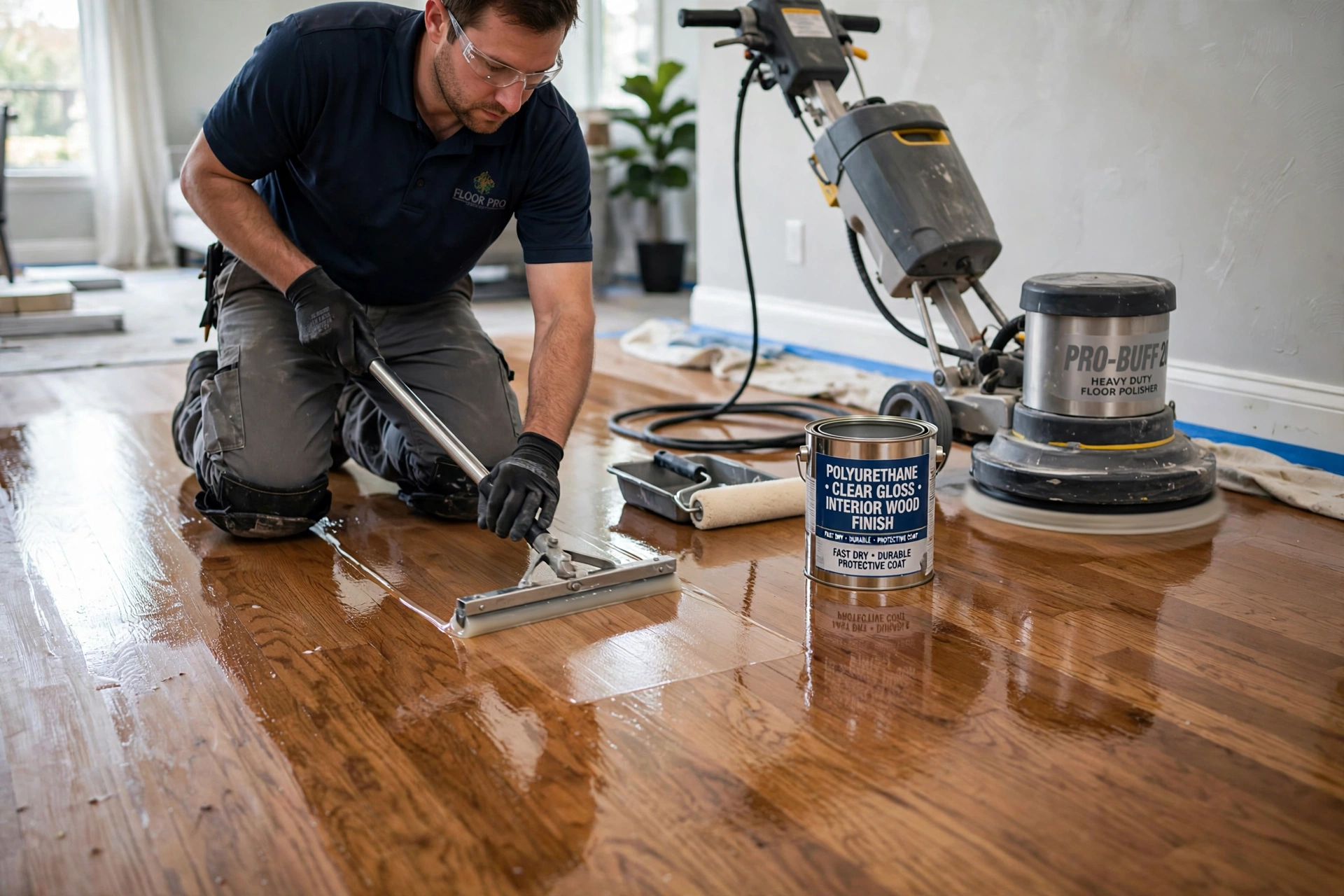
After the appropriate surface preparation, a compatible protective coating can help restore sheen and protect the wood against ordinary household wear.
The selected product should match the floor’s existing finish where necessary and be suitable for the wood and intended use. Correct application, recommended coating thickness, and adequate drying between coats all contribute to the quality of the result.
Choosing a Polyurethane Hardwood Seal
Polyurethane is a commonly used protective finish for hardwood floors. It forms a durable coating that helps protect the wood against everyday wear, scuffs, and minor spills when properly maintained.
Polyurethane finishes are available in different sheen levels, allowing homeowners to select an appearance that complements their interior design.
Satin vs. Gloss Polyurethane Finishes
Choosing between satin and gloss depends on the appearance you want and the amount of visible surface variation you are comfortable with.
Satin polyurethane finish: Satin offers a softer, lower-sheen appearance. It can create a natural-looking finish and may make minor surface imperfections less noticeable than a high-gloss coating.
Gloss polyurethane finish: Gloss produces a highly reflective surface that emphasizes the shine of the floor. It can make the wood look polished and striking, although scratches, dust, and uneven areas may be more noticeable under certain lighting conditions.
Neither option is universally better. Satin suits homeowners who prefer understated elegance, while gloss may appeal to those seeking a more reflective appearance.
Selecting the Right Polyurethane Coating
Polyurethane products differ in formulation, application requirements, and drying characteristics. Water-based products often have lower odor and may dry more quickly between coats, while oil-based products can provide a warmer tone and generally require longer drying periods.
The best choice depends on the existing floor, desired color, ventilation, household needs, and manufacturer recommendations.
Protecting the New Finish
Once the polyurethane hardwood seal has been applied, following the manufacturer’s instructions is essential. Avoid introducing furniture, rugs, or heavy foot traffic before the finish is ready for those activities.
Use felt pads beneath furniture legs and clean the floor with products specifically recommended for finished hardwood. Avoid excessive water and abrasive cleaners that could wear down the protective coating.
Hardwood Floor Refinishing: Drying and Curing Times
Drying and curing are important parts of any hardwood refinishing project. Although a coating may feel dry to the touch, it may not yet have reached the hardness needed to withstand normal use.
What Affects Drying Time?
Several factors influence how quickly a finish dries:
Finish type: Water-based and oil-based polyurethane products have different drying requirements.
Temperature: Conditions outside the recommended range can slow drying.
Humidity: High humidity may extend drying time for some finishes.
Ventilation: Appropriate airflow can help support drying when used according to product instructions.
Application thickness: Heavy or uneven coats can take longer to dry.
Homeowners should follow the specific product instructions rather than relying on a universal drying-time estimate.
When Can You Walk on the Floor?
Light foot traffic may be permitted after the finish reaches the manufacturer’s specified dry time. Furniture placement, rugs, and normal household use may require additional waiting.
Why Full Curing Matters
Full curing is the period during which the finish develops its intended durability. It can take several days or longer, depending on the product and environmental conditions. Placing rugs too early or exposing the floor to heavy use can interfere with the finish’s performance.
Always confirm the recommended timeline with the flooring professional and finish manufacturer.
How to Maintain Hardwood Floors After Refinishing
Once your floor has been refinished, simple maintenance habits can help preserve its appearance and extend the life of the protective coating.
Everyday Hardwood Floor Care
Sweep or vacuum regularly using equipment suitable for hardwood floors.
Place entry mats near exterior doors to reduce tracked-in dirt.
Use felt pads beneath chairs, tables, and other movable furniture.
Wipe up spills promptly with a soft, dry or slightly damp cloth as appropriate.
Avoid steam mops and excessive moisture unless the flooring manufacturer specifically approves them.
Use a hardwood-safe cleaner recommended for your finish.
Address small scratches before they develop into more extensive wear.
Regular care reduces abrasive dirt and helps maintain a consistent sheen between professional treatments.
Why Consider MGx Hardwood Care for Your Flooring Needs?
Hardwood floor maintenance requires the right combination of assessment, preparation, suitable materials, and ongoing care. Choosing an appropriate treatment can help protect the appearance of your floors without undertaking more work than necessary.
MGx Hardwood Care provides homeowners with a point of contact for discussing flooring care requirements. When contacting the company, ask whether it offers hardwood sanding, dustless refinishing, screen and recoat maintenance, and polyurethane finishing.
You can also ask about dust-containment equipment, available sheen levels, estimated project duration, and the recommended period before returning furniture to the room. Confirming these details in advance helps you understand what to expect and select a service that matches your needs.
Conclusion
Hardwood floor dustless sanding and refinishing can help restore the appearance of scratched, dull, and worn wood floors. HEPA vacuum containment systems help manage sanding dust, screen and recoat treatments can refresh suitable existing finishes, and polyurethane coatings provide a protective surface in a choice of sheen levels.
The right solution depends on the condition of your hardwood and the type of finish already present. By understanding these options and following a consistent maintenance routine, homeowners can make informed decisions about protecting their flooring.
Contact MGx Hardwood Care to discuss your hardwood floor care needs and confirm which sanding, refinishing, and maintenance services are available for your home.